What Kingman Homeowners Should Know About the New 2026 Cooling Rules
Kingman sits in a high desert basin where July afternoons push outdoor condensers harder than almost anywhere in Arizona. The region’s heat, dust, and elevation converge on air conditioners in a way that exposes weak components, magnifies small installation mistakes, and shortens margins for error during air conditioning repair. The new cooling rules taking hold by 2026 tighten those margins further. They change which refrigerants go into new systems, how technicians handle service work, and how homes get evaluated for safe installation. Local homeowners who understand these shifts can plan upgrades, avoid surprise delays, and keep cooling reliable through the hottest weeks.
Why 2026 matters in Kingman’s high desert climate
Mohave County heat is not abstract. On a 110-degree afternoon, a rooftop packaged unit on a flat roof near Andy Devine Avenue can see deck surface temperatures near 150 degrees. At those conditions, a standard R-410A condensing unit often runs condensing temperatures around 135 to 145 degrees, which corresponds to discharge pressures in the 380 to 420 psig range. That pressure puts extra stress on the compressor, contactor, and especially the run capacitor. In Kingman’s dry air, condenser coils reject less heat per cubic foot of airflow compared to sea level, so the compressor works harder to hit the thermostat setpoint. Homes from Hilltop to the White Cliffs area feel this every summer when the 3 to 6 PM load spikes and the west-facing windows glow.
By 2026, almost all new residential AC and heat pump systems installed in Arizona will ship with “A2L” low-GWP refrigerants like R-454B or R-32. This shift began in 2025 at the manufacturer level as part of the national HFC phasedown. For Kingman homeowners, the noticeable effects roll downhill into parts availability, service procedures, installation checks, and timelines for permits and inspections. The equipment itself cools well in this climate, but everything around it changes enough to warrant attention now.
The new cooling rules in plain terms
The federal local air conditioning repair HFC phasedown continues to restrict high global warming potential refrigerants such as R-410A for new equipment. Manufacturers have moved to R-454B and R-32 for split systems, packaged units, and heat pumps. These A2L refrigerants are mildly flammable under specific conditions, so equipment is redesigned with sensors, pressure relief, and charge limits that vary by indoor room size. By 2026, Arizona jurisdictions and utilities expect installations to follow updated codes and manufacturer instructions that account for A2L safety and labeling. Servicing legacy R-410A systems remains legal, but the cost and availability of R-410A will continue to tighten.
New DOE efficiency tests (SEER2) already changed coil sizes and fan profiles in 2023. The next practical effect for homeowners is this: technicians will approach charging, leak repair, and even line set reuse differently. Purging with dry nitrogen, deeper evacuation targets, and more stringent line set inspections move from “best practice” to “must do.” Those are not academic changes. They affect how quickly a system can be repaired during a July outage and whether a legacy line set behind stucco in an older Butler or Valle Vista home can stay in service with a new condenser and air handler.
Refrigerant transition: R-410A to R-454B and R-32
R-410A carried the cooling market for two decades. It is stable, non-flammable, and familiar. It also has a global warming potential around 2,088. R-32 sits near 675. R-454B is lower still, around 466, and operates at pressures similar to or slightly lower than R-410A. In Kingman’s heat, that pressure difference matters. For example, at a 140-degree condensing temperature, R-410A saturation pressure lands above 400 psig on many gauges, while R-454B can sit roughly 10 to 15 percent lower. Lower head pressure reduces compressor amperage and thermal stress during peak load. That mechanical relief helps in our climate, where units commonly run from late morning through midnight without a break during the June and July extremes.
These new refrigerants do not drop into old equipment. A system built for R-410A must stay on R-410A. Converting the refrigerant requires compatible components, expansion devices, and comprehensive oil management, which is not viable in field conditions. For homeowners, that means a failed R-410A compressor on a 12-year-old system is a fork in the road: invest in a major repair using legacy refrigerant and parts, or replace with new A2L equipment and address line sets, airflow, and electrical details in one planned project. Either choice is valid based on age, repair history, and budget. The 2026 environment only raises the stakes on timing and parts logistics.
Safety and code features built into A2L systems
A2L refrigerants require labeling, specific service ports, and adherence to charge limits that relate to room volume. A typical split-system indoor air handler in a closet or small mechanical room may face a maximum allowable charge without added safeguards. Manufacturer instructions may call for ventilation openings, a specific door undercut, or system accessories that reduce leak risk in confined spaces. Installers must keep ignition sources separated from refrigerant piping in certain areas and follow electrical bonding and disconnect placement that maintain safe service conditions.
These requirements are not abstract code notes. They show up during permit review and final inspection. Kingman homeowners who remodeled older homes along the Route 66 corridor, or who own compact mechanical closets in condos near Downtown Kingman, benefit from a pre-installation site survey that measures room volume, doorway placement, and return air pathways before equipment is ordered. That prevents last-minute change orders when the new air handler arrives and the label calls for a smaller refrigerant charge than the original R-410A unit used.
What this means for air conditioning repair in 86401, 86409, and 86413
Service will split between two realities through 2026. One set of homes runs legacy R-410A systems that need parts like run capacitors, contactors, blower motors, and occasionally refrigerant recharge. Another set has new R-454B or R-32 units that call for A2L-rated recovery machines, spark-protected tools, and different charging tables. Ambient Edge trucks serving Hilltop, Hualapai Mountain Terrace, and the Kingman Airport area are already built for both worlds. That prevents delays on a 7 PM call when a capacitor fails, a TXV sticks, or a system trips on high pressure during a dust storm that fouls the condenser coil.
The most common summer breakdowns in Kingman hold steady, regardless of refrigerant. Dirty condenser coils raise head pressure. Clogged condensate lines shut systems off at the float switch. Failing capacitors stall compressors and condenser fans. Refrigerant leaks drop subcooling and produce warm air from vents. Dust-choked filters reduce airflow, ice the evaporator coil, and cause short cycling. A2L systems handle the load well, but they do not forgive neglect. The 2026 rules make maintenance the front line of reliability, especially for packaged units in Golden Valley and split systems near the Hualapai Mountain area that see windblown dust each afternoon.
Charging and diagnostics change under SEER2 and A2L
SEER2 equipment often uses larger coils and different metering devices to hit lab-tested efficiency at real static pressures. Field charging now leans more on manufacturer-specific subcooling and superheat charts that assume hotter, dustier conditions. In Kingman’s elevation, condenser fan airflow removes fewer BTUs per minute than it would at sea level, so a competent technician accounts for that when interpreting pressures and temperatures during air conditioning repair. That is the difference between a system that cools but struggles at 6 PM and a system that runs at its rated tonnage.
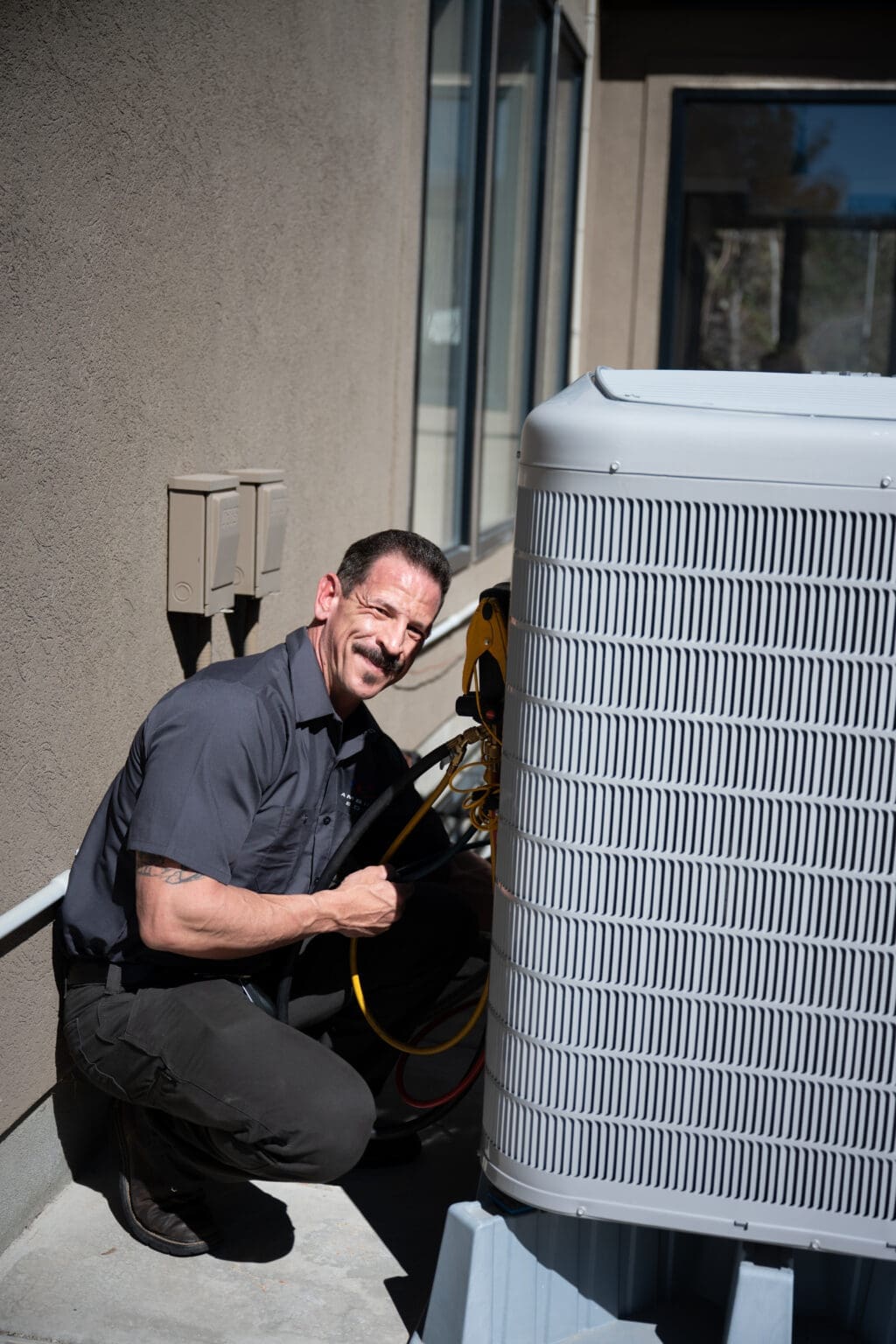
On A2L systems, recovery and evacuation steps use tools that do not create sparks where refrigerant may be present. Nitrogen pressure tests may be set to slightly different targets per OEM, and vacuum holds are documented before refrigerant is introduced. None of this slows a prepared crew, but it will extend service time for any contractor who shows up without A2L-ready equipment or a clear plan for line set reuse on a retrofit. In older homes along the Locomotive Park area or the Andy Devine Avenue corridor where line sets run through tight chases, this planning prevents return trips when a joint buried behind stucco cannot pass a pressure test.
A locally grounded fact Kingman homeowners can use
On a 110-degree afternoon in Kingman, a rooftop packaged R-410A unit with a 30-degree condensing temperature split often operates near 140 degrees condensing. That places the saturation pressure above 400 psig. Swap that same duty to an R-454B packaged unit of equal capacity and the condensing pressure at 140 degrees typically lands about 10 to 15 percent lower. That difference can reduce compressor amperage by several amps under peak load. It also lowers thermal stress on the run capacitor and contactor. In practical terms, a correctly charged R-454B unit on a clean coil can shave enough head pressure to run through the 4 to 7 PM peak without nuisance trips that many Kingman rooftops experience in late July. This is measurable with a good clamp meter and gauge set, and it matches what homeowners feel inside: steadier vent temperatures during the hottest hour.
Planning decisions for 2024–2026
Homeowners in 86401, 86409, and 86413 are at a decision point. Many R-410A systems installed during the 2009–2014 build wave are reaching 12 to 17 years of service. In Kingman’s heat and dust, that is close to the economic life of a hard-running condenser. A well-maintained unit can exceed that range, but unplanned breakdowns trend upward after year 12. The refrigerant transition does not force immediate replacement, yet it does change the math on major repairs. Compressors, evaporator coils, and TXV valves remain available for R-410A, but logistics get choppier each summer and refrigerant pricing trends upward.
For homes in Valle Vista that run long line sets from a side-yard condenser to a central hallway air handler, a proactive replacement offers the window to assess line set condition, pressure test with nitrogen, and replace if corrosion or oil contamination is evident. For older downtown bungalows near Route 66, compact air handler closets may need slight framing or door adjustments to meet A2L clearances and airflow needs. New equipment often calls for updated breaker sizing and a dedicated service disconnect with correct labeling. These are light structural and electrical details, but they can slow an installation if discovered on the day of the swap.
Airflow and ductwork under SEER2
SEER2 testing puts real-world external static pressure at the center of the rating. Many older Kingman duct systems that “got by” with narrow returns now reveal their limits with newer air handlers. A return drop sized for a three-ton R-22 system from the 1990s may choke a modern three-ton R-454B air handler. The result is low airflow, iced evaporator coils, and warm air from vents under load. Before ordering new equipment, measuring total external static pressure with a manometer and checking filter racks, return grilles, and the supply plenum saves rework. In homes near Kingman Regional Medical Center where attic duct runs are long and dusty, sealing joints and adding a larger return can restore the capacity the homeowner is paying for on the nameplate.
This is also where brand differences show. A three-ton Trane or Lennox air handler paired to a matched condenser may deliver rated capacity in Kingman only if duct static sits near or under the OEM’s specified limit. A half-inch water column over target can slash airflow enough to fool a technician who checks only temperature split. Good practice in Mohave County climates verifies static, airflow, and coil cleanliness before calling a repair complete.
What changes for packaged units and small commercial spaces along Andy Devine
Packaged rooftop units dominate older housing and light commercial spaces along the Andy Devine Avenue corridor and around the Mohave Museum of History and Arts. These units face the most brutal operating conditions: high roof temperatures, gusty dust, and sun exposure through sunset. The 2026 refrigerant transition will bring A2L variants of these packaged units with similar capacity but different charge size, revised economizer controls, and updated installation labels.
For a landlord with multiple small units near the Mohave County Fairgrounds or close to the Kingman Airport, the practical impact is service coordination. Mixed roofs with R-410A units beside R-454B units will require technicians to carry both refrigerants and recovery cylinders, plus A2L-rated recovery machines. That doubles the penalty for poor coil maintenance. Dirty coils raise head pressure on both refrigerants, but the consequences in July now include extended on-roof service times tied to added safety steps. A disciplined coil cleaning plan in May prevents mid-summer calls when access ladders are hot to the touch and parts trucks are already running tight routes.
How the new rules touch everyday failure symptoms
Air conditioning repair remains familiar by symptom. In Kingman, “AC not cooling” still traces back to the same core failures: refrigerant leaks, a failed run capacitor, blower motor failure, a fouled condenser coil, or a stuck TXV valve. A2L systems do not change the diagnosis. They change what happens next. Recovering refrigerant requires A2L-rated machines. Brazing lines on a retrofit requires disciplined nitrogen purging, and spark-safe tools near the refrigerant circuit. Evacuations take place to verified microns and documented hold times. Each step protects the compressor on a 110-degree day when a sloppy vacuum procedure would otherwise produce non-condensables and high head pressure a week later.
For split systems serving homes near Hualapai Mountain Park, where evening downslope winds carry dust that loads condenser fins, coil cleanliness is not maintenance fluff. A clean coil and a correct refrigerant charge can bring head pressure down enough to prevent a high-pressure trip at 5 PM, which is when the grid is hottest and field response times slow. For homes in Golden Valley, where west-facing exposure is common and attic ventilation varies, a clogged air filter or a return drop that is one size too small can tip a system into short cycling during peak load. These are system-level issues, not refrigerant-only problems.
What homeowners can expect when replacing equipment in 2026
Ordering the same “tonnage” is not enough in Mohave County. Correct sizing requires a Manual J heat gain calculation that captures window area, orientation, insulation values, and infiltration. Homes near Route 66 with broad west-facing glass need special attention to late-afternoon loads. In-fill construction near the Locomotive Park area often has compact mechanical spaces that constrain return air and filter sizes. Valley homes in 86409 with longer duct runs must meet static targets for a modern air handler to deliver its SEER2 promise.
Brands like Trane, Lennox, Carrier, Rheem, York, Goodman, Daikin, and Mitsubishi Electric now publish detailed A2L guidance for line sets, minimum bend radii, and allowable refrigerant charge adjustments per additional line length. Reusing a line set in a retrofit demands clean, dry, pressure-tested copper with verified wall thickness and brazed joints that can hold test pressure without decay. A new R-454B condenser matched to an R-32 indoor coil is a mismatch; components must be within the same refrigerant family and AHRI-matched for performance and warranty coverage. Good installers in Kingman bring this paperwork to the permit desk and leave a copy with the homeowner.
Electrical and controls details that matter in Mohave County
Modern variable-speed condensers and air handlers often draw different inrush currents and require updated breaker sizes. A run capacitor that once lived for seven years on a fixed-speed condenser near White Cliffs may not even exist on a variable-speed unit built for A2L. Instead, the system relies on ECM motors and electronics that are more tolerant of voltage fluctuation but demand correct surge protection. Thermostat selection also matters. A smart thermostat with aggressive dehumidification features set for Gulf Coast humidity will overdrive a Kingman system and can produce long runtimes without added comfort. Programming the control to match low desert humidity keeps compressor cycles appropriate for our climate.
How inspections and permits evolve through 2026
Local authorities adopt code updates on their own timelines, but by 2026 most permitted AC installations in Mohave County will include A2L labeling checks, documentation of refrigerant type, and basic verification that the installation matches manufacturer instructions. Inspectors may ask for the model numbers to confirm refrigerant compatibility, and they may look at return air sizing if the air handler sits in a closet with limited volume. Contractors who measure room volume and collect model numbers before placing orders avoid failing a final inspection over a mismatch that was predictable on paper.
For homeowners in the Hualapai Mountain area where some homes sit at higher elevations and see cooler nights, inspectors still focus on safe, code-compliant installs. The elevation does not change the A2L rules, but it does affect capacity and may allow smaller charge sizes in practice. For new additions and detached garages in 86413, small ductless mini split installations using R-32 are straightforward when the outdoor clearances, line lengths, and indoor room volumes meet the printed tables. The key is reading the tables before the rough-in is closed and drywall goes up.
What to ask any contractor before authorizing air conditioning repair or replacement
Kingman homeowners can set the tone early with a few precise questions. Ask whether the truck is equipped for both R-410A and A2L service, including rated recovery machines, hoses, and core tools. Ask how line sets will be evaluated and tested if a replacement is planned. Ask for a copy of the model numbers being installed, the refrigerant type, and the AHRI match. Ask whether a Manual J was run or whether the contractor used a per-square-foot guess. These are practical questions that prevent callbacks in the hottest week of July when delays are the most punishing.
For homeowners near Kingman Regional Medical Center or along the Andy Devine Avenue corridor where street parking and roof access can slow a job, ask how access logistics are handled and whether the crew will stage coil cleaning or condenser placement to avoid late-day sun with surface temperatures near 150 degrees. Small planning steps here keep labor efficient and protect the equipment during the first start-up when thermal conditions are worst.
New systems, legacy homes: realistic timelines
Expect longer lead times for specialty evaporator coils, OEM TXV kits, and certain control boards through the 2025–2026 transition. Manufacturers are focused on new A2L production. R-410A components will remain available, but niche parts on older product lines can sit in backorder status for weeks mid-summer. A Kingman homeowner in Downtown Kingman or South Kingman who wants certainty during the first heat wave should schedule coil cleanings and capacitor checks in spring. That way a July surprise is less likely to require a rare part on a Friday afternoon. If a system is a known replacement candidate, ordering equipment early in the season avoids the August scramble when inventory tightens across Mohave County, Bullhead City, and Lake Havasu City.
For those weighing an upgrade to a heat pump, the 2026 environment is favorable. A properly sized heat pump with an efficient reversing valve and a matched air handler handles Kingman’s winter lows easily. The gain is in summer efficiency at peak load. With R-454B’s lower head pressure under Kingman conditions, many variable-speed heat pumps match or beat the comfort of legacy straight-cool units while lowering peak amperage. That helps in neighborhoods where summer utility peaks align with the evening load from west-facing homes near the Route 66 corridor.
Commercial considerations on small offices and storefronts
Small commercial suites near the Mohave Museum of History and Arts and along the Andy Devine Avenue corridor often use 5 to 10 ton packaged units. Under the 2026 landscape, replacing one failed rooftop with an A2L unit means the service vendor must segregate tools and recovery cylinders for that refrigerant. Building owners should expect more meticulous documentation on rooftop label photos, refrigerant weights, and pressure test logs. These records reduce liability and support warranty claims if a compressor fails early. For multi-tenant strips, combining preventive maintenance across all rooftops can be the difference between four short summer outages and none at all.
Kingman-specific variables that change the repair playbook
Dust is a year-round variable from Golden Valley into Kingman proper. It lodges in condenser fins and restricts airflow. Hard water affects condensate lines and drain pans. The combination produces frozen evaporator coils and clogged condensate drains at higher rates than coastal markets. In the White Cliffs neighborhood, where summer sun loads are intense and roofs hold heat late into the evening, blower motors see higher run-hours that accelerate bearing wear. In Valle Vista, long line sets can introduce oil return challenges on improperly pitched runs, especially when a new, higher-efficiency condenser is paired to an old indoor coil that was never meant to match it.
For homeowners near Kingman Airport, high winds deposit debris that works its way into outdoor fan blades and fan motor housings. Strange AC noises on startup after a wind event are not unusual. Left alone, these vibrations stress the fan motor and can loosen mounting hardware. A quick fan inspection and condenser coil rinse after windstorms is a small action that prevents a 9 PM service call when the fan stops freewheeling and the compressor goes out on thermal limit.
Where the 2026 rules intersect with comfort upgrades
Variable-speed condensers and air handlers paired with a properly sized duct system make a measurable difference in Kingman’s late-day comfort. Instead of waiting for the home to warm and then slamming into high-stage cooling, the system modulates to hold a steady indoor temperature, which is precisely what homeowners near Locomotive Park and Downtown Kingman need during summer events. A whole-house dehumidifier does not carry as much value here as in humid climates, but a well-programmed programmable thermostat can stage cooling to pre-cool the home before the 4 to 7 PM peak without running the system longer over a full day.
Ductless mini split systems using R-32 refrigerant provide targeted cooling in additions, garages, or detached workshops in 86409 where running new ducts is impractical. They install cleanly when room volumes and clearances match the manufacturer’s A2L tables. For homeowners upgrading a central system while also conditioning a workshop, coordinating both projects under one permit package helps inspectors review the A2L measures once and keeps commissioning steps uniform.
Serving every part of Kingman with site-aware service
From the Andy Devine Avenue corridor to Hilltop, and out to Golden Valley and Valle Vista, equipment mix and exposure patterns change block by block. Downtown Kingman sees older split systems with tight mechanical closets. White Cliffs homes run rooftop packaged units facing unrelenting afternoon sun. The Hualapai Mountain area enjoys cooler nights but pushes long uphill refrigerant runs and variable attic ventilation. Fort Mohave and Mohave Valley tilt hotter and more humid at times, which changes sensible versus latent loads. Air conditioning repair in these areas must account for the exact site, not just the nameplate on the condenser.
Ambient Edge serves the full Kingman area across zip codes 86401, 86409, and 86413, and supports nearby communities including Bullhead City, Lake Havasu City, Chloride, Hackberry, and Dolan Springs. Homes along Route 66 and near Hualapai Mountain Park experience west-facing solar gains that stack right when grid cooling demand is most expensive. That is when a clean condenser coil, a correct refrigerant charge, and a verified capacitor value pay for themselves in real comfort and stable operation.
Key changes Kingman homeowners will notice by the 2026 cooling season
- Most new AC and heat pump systems will use A2L refrigerants such as R-454B or R-32, with updated safety labels and charge limits tied to room volume. R-410A repairs remain possible, but refrigerant and certain parts will be harder to source mid-summer; planning matters more after year 12 of equipment age. SEER2-rated equipment is less forgiving of undersized returns and high static pressure; airflow verification becomes standard on quality repairs and replacements. Technicians will use A2L-rated recovery tools and spark-safe practices; the best crews already carry both R-410A and A2L service capability to avoid delays. Permit reviews and inspections will check refrigerant type, labeling, and installation clearances more closely, especially for air handlers in small closets.
Where codes can trigger extra steps in Kingman homes
- Indoor air handlers in small closets near bedrooms may require documented room volume and return air openings to meet A2L charge guidance. Line set reuse on older houses along Route 66 can fail pressure tests; budget time for replacement if buried joints cannot be verified. Electrical panels serving upgraded variable-speed condensers may need breaker adjustments and labeled disconnects for inspection approval. Packaged rooftop units on sun-baked roofs near Andy Devine often require coil cleaning and shroud checks during startup to pass pressure and temperature tests. Condensate lines with hard water scale benefit from trap rebuilds or reroutes to prevent float switch trips during peak cooling hours.
For homeowners comparing brands in Mohave County conditions
Trane and Lennox variable-speed systems handle modulation gracefully in low humidity and high heat when duct static is kept within spec. Carrier, Rheem, York, Goodman, and Daikin build competitive R-454B equipment with clear installation tables that protect performance when line sets run longer distances common in Valle Vista. Mitsubishi Electric ductless systems using R-32 excel in room-by-room applications where central ductwork cannot be extended. The common thread is proper Manual J sizing and duct verification. In our climate, a half-ton oversize paired with a choked return delivers worse late-day comfort than a correctly sized system on a clean, low-static duct system.
Whichever brand a homeowner selects, matching the indoor coil, outdoor unit, and metering device is non-negotiable. AHRI-matched systems protect capacity and warranty coverage. In Kingman, where afternoons routinely hit triple digits, mismatched coils commonly show up as warm air from vents between 3 and 6 PM and repeated service calls for “low cooling” that are really airflow or metering problems made visible by our extreme load.
What this all means when the AC stops in July
When a system fails on a 112-degree day, the fastest path to cold air is a truck with the right parts and the right test tools for the refrigerant on site. For R-410A systems, that often means a replacement run capacitor, a contactor, and a good coil rinse, followed by a refrigerant check without introducing non-condensables. For an R-454B or R-32 system, it may mean a leak search, a verified nitrogen pressure test, evacuation to spec, and a precise charge by weight and trim by subcooling. The difference between a same-day fix and a night without cooling is often a technician’s preparedness for A2L service and a homeowner’s willingness to authorize coil cleaning and airflow corrections instead of chasing pressures alone.
Kingman homeowners from Downtown to White Cliffs know this cycle. The first heat wave reveals who maintained coils, who changed filters, and which capacitors were already weakening. The 2026 cooling rules do not change physics. They refocus attention on the details that keep systems stable under our specific climate load.
Why local experience matters on the 2026 transition
Kingman’s combination of elevation, low humidity, and relentless sun makes each national rule feel different on the ground. A front-line technician who has seen how a condenser on a roof near Route 66 behaves at 5 PM in July can interpret pressures and temperatures with the right context. That same tech recognizes when a blower motor is laboring against a return drop that is one size too small and when a TXV is sticking because debris from old line sets was not properly flushed before a retrofit. With A2L refrigerants, that judgment now includes verifying room volume numbers, keeping ignition sources clear, and using instruments that are both accurate and safe for the refrigerant class.
The 2026 rules will settle into routine. For Kingman homeowners, the practical steps are simple: plan early, keep coils clean, verify airflow, and pair equipment correctly. The result is a system that rides through the hottest hour without drama, which is the benchmark that matters in Mohave County.
Need help aligning your system with the 2026 cooling rules?
Ambient Edge serves Kingman and all of Mohave County with NATE-certified technicians, EPA 608 credentials, and Arizona ROC-licensed HVAC service for residential and commercial systems. The team services and installs Trane, Lennox, Carrier, Rheem, York, Goodman, Daikin, and Mitsubishi Electric systems, and stocks A2L-ready recovery and charging equipment for R-454B and R-32 alongside legacy R-410A support. Service is available 24 hours a day, 7 days a week, 365 days a year, with flat-rate pricing provided in writing before work begins. For same-day air conditioning repair in 86401, 86409, and 86413 — from the Andy Devine Avenue corridor to the Hualapai Mountain area and Golden Valley — call (833) 226-8006 or visit https://www.ambientedge.com/kingman/. Financing options, VIP maintenance plans, and 10-year parts and labor warranties on new system installations are available.
Ambient Edge Heating, Air Conditioning & Refrigeration Inc.
Our Location:
3270 Kino Ave,
Kingman,
AZ
86409
Phone: +1 928-615-8224
Web: www.ambientedge.com